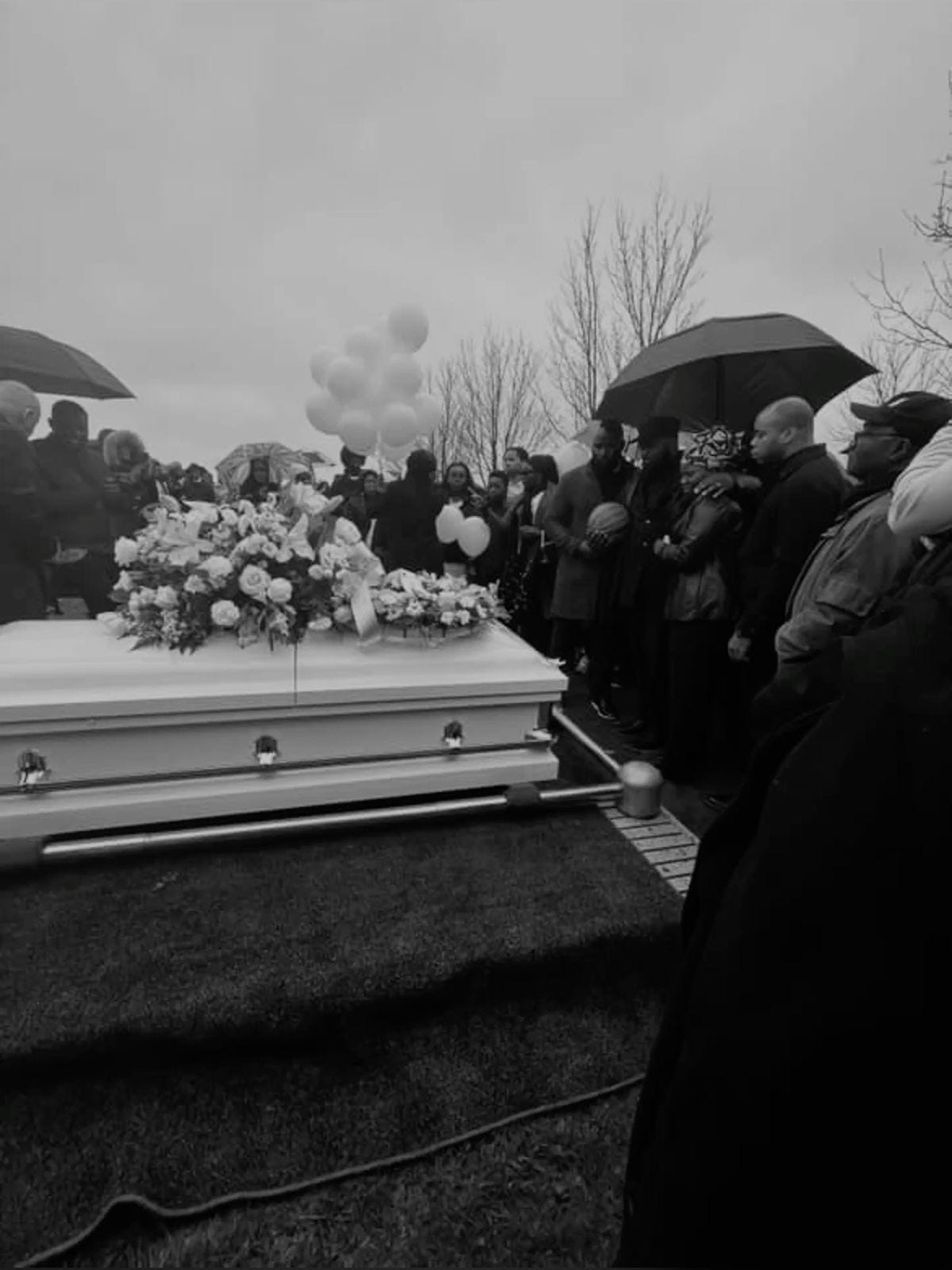
Death does not create dysfunction. It reveals it.

Death does not create dysfunction. It reveals it.
People like to say funerals tear families apart, as if grief itself is the villain. As if loss suddenly turns good people into selfish ones. But the truth is harder and quieter than that. Death does not change people’s values. It exposes them.
When someone dies, the systems that were held together by avoidance, hierarchy, silence, and unspoken agreements lose their anchor. The person who once absorbed tension, mediated conflict, or simply kept the peace is gone. And what’s left is a family forced to confront how it actually functions.
This is why money shows up so often after death. Not because people are greedy by nature, but because money represents power, entitlement, and unspoken belief systems. It brings to the surface questions people have avoided for decades. Who deserves what. Who has authority. Who gets to decide. Who is allowed to speak.
I’ve been thinking deeply about a situation where money was found after a death. A small amount in the grand scheme of life, five hundred dollars, but psychologically, it might as well have been five million. Because the amount never matters as much as the behavior around it.
A parent finds money while clearing out a deceased loved one’s home. There are multiple siblings. Shared grief. Shared responsibility. Shared history. And instead of discussion, instead of transparency, instead of collective decision making, the money is quietly kept.
And what’s more unsettling is not the act itself, but the response to it.
The adult child, when asked what they think, does not speak up. They do not say this feels wrong. They do not ask why it wasn’t shared. They do not question the ethics of it. Instead, they praise the behavior. They validate it. They reinforce it.
From the outside, this looks like loyalty. From a psychological lens, it is something else entirely.
It is fear.
Many adults have never emotionally separated from their parents. They have grown bodies, responsibilities, careers, and relationships, but internally, they still operate from the position of a child seeking approval. Their nervous system has not updated the power dynamic. So when a parent does something unethical, the adult child experiences an internal conflict they do not know how to resolve.
If I speak up, will I lose love? If I challenge this, will I be rejected? If I say this is wrong, will I be punished emotionally?
For someone who never learned that love can survive disagreement, silence feels safer than truth.
This is where cognitive rigidity shows up inside family systems.
Rigid systems rely on hierarchy, not accountability. Authority flows in one direction. Parents are not questioned. Elders are not challenged. Behavior is excused under the umbrella of respect. And anyone who disrupts that order is labeled difficult, ungrateful, or divisive.

So instead of holding people accountable, families develop coping mechanisms. Minimization. Rationalization. Spiritual bypassing. “That’s just how they are.” “It’s not worth arguing.” “Let it go.” “They’ve been through a lot.”
What never gets said is this: avoiding accountability is also a choice. And silence is not neutral. Silence protects the person with power.
When death enters the picture, those dynamics are no longer theoretical. They become practical. There are houses to clear. Finances to handle. Decisions to make. And suddenly, the patterns that were once emotional become material.
That is why money is so explosive after death. It forces values into action.
Psychologically, grief lowers people’s capacity for regulation. Old wounds resurface. Sibling rivalries reemerge. Childhood roles get activated. The responsible one becomes responsible again. The quiet one disappears again. The controlling one takes charge again. The peacemaker tries to keep everyone calm again.
Everyone snaps back into who they were when survival depended on it.
This is why funerals break families apart. Not because grief makes people cruel, but because grief removes the buffer that kept dysfunction hidden.
And the families that fall apart are often the ones who never learned how to speak truth while love is still present.
Accountability requires cognitive flexibility. It requires the ability to hold two realities at once. I love you and what you did was wrong. I respect you and I do not agree with this. I honor our relationship and I need to name this behavior.
Many people cannot do this, especially with parents, because they were raised in environments where love was conditional. Where obedience was rewarded more than integrity. Where speaking up had consequences.
So when faced with unethical behavior, they freeze. Or they praise it. Or they justify it. Anything to avoid the internal threat of rejection.
But here is the part that is difficult to accept.
When someone praises behavior they know is wrong, they are not just avoiding conflict. They are reinforcing a system that will repeat itself.
That five hundred dollars is no longer just money. It becomes a symbol. A message. A precedent. It says, this behavior is acceptable. This silence is expected. This power dynamic will remain intact.
And everyone watching learns something.
They learn who is allowed to take. They learn who is expected to stay quiet. They learn whose comfort matters more than fairness.
This is why death feels so revealing. It strips away the story people tell themselves about who they are.
I’ve been sitting with the realization that many people are surrounded by others they would not want making decisions in crisis. Not because those people are evil, but because they lack the capacity to act ethically when it costs them emotional safety.
And that is terrifying.
Because integrity is not tested in comfort. It is tested in moments like these. When no one is watching. When grief is heavy. When authority goes unchecked. When silence is easier than truth.
Cognitive flexibility allows someone to pause and ask bigger questions in these moments. What is fair. What is ethical. What aligns with my values. What kind of person do I want to be when no one is here to correct me.
It also allows someone to see patterns clearly. To recognize that the same person who avoids accountability in grief likely avoids it in relationships. That the same silence that protects a parent’s wrongdoing also protects a partner’s. That the same fear of speaking up shows up everywhere.
And once you see that, it changes how you choose your circle.
Because you start realizing that emotional maturity is not about being calm. It is about being honest. It is not about keeping the peace. It is about doing the right thing even when it disrupts comfort.
Families that survive death intact are not perfect. They argue. They disagree. They cry. But they have one thing in common. They allow accountability to exist alongside love.
They do not confuse respect with silence. They do not confuse loyalty with complicity. They do not confuse hierarchy with morality.
They understand that holding someone accountable is not betrayal. It is an act of care.
And this is where the grief becomes layered.
Because once you realize this, you start grieving more than the person who died. You grieve the family you wish you had. The conversations that never happened. The truth that was never allowed to exist.
You grieve the fact that some people will always choose comfort over character.
And you begin to make different decisions.
You start asking yourself who you want beside you in hard moments. Who you trust to speak up when you can’t. Who will choose fairness over fear. Who will not praise wrongdoing just to stay emotionally safe.
Because death does not ask who loves you. It asks who shows up with integrity.
And once you understand that, you stop romanticizing silence. You stop excusing behavior that harms others. You stop calling avoidance peace.
You start valuing people who have a voice. Even when it shakes the room.
Especially then.